How to Maintain Donor Confidence Through Transparent Financial Reporting in Kenyan Not-for-Profit Organizations
Donor confidence grows when a not-for-profit can explain how it used its funding, what the spending helped deliver and what changed along the way. This guide shows Kenyan not-for-profit leaders, finance teams and boards how to track restricted grants, explain budget variances and turn financial reporting into a routine part of donor stewardship.
A donor reviewing a quarterly report sees that a programme spent 25% less than budgeted. Is the project saving money? Were activities delayed? Will the organisation need to carry funds into the next reporting period?
The figures alone cannot answer those questions. The finance team needs to explain what happened, what it means for programme delivery and whether the donor needs to make a decision. That explanation is where transparent financial reporting earns its value.
For Kenyan not-for-profits, donor confidence depends on being able to connect funding received, spending incurred and work delivered. A well-designed report makes that connection easy to follow, even when an organisation manages several grants, works through implementing partners or makes field payments through M-Pesa.
1. Track each grant from receipt to expenditure
Transparency starts when the grant is set up in the accounting system. Give each grant or project a code and map its approved budget lines to the organisation’s chart of accounts. This allows the finance team to produce donor reports from the same ledger it uses for management reporting.
Where funding is restricted to a specific purpose, track the restriction and the remaining balance. A healthy bank balance can include funds already committed to designated activities. Boards and management need to know how much is available for general operations, how much is restricted and what payments are coming due.
Shared costs deserve particular attention. If several projects benefit from the same staff time, office space or transport, document how the cost is allocated and check the basis against the relevant grant agreements. A donor reviewing a charge should be able to trace it to the underlying expense and understand why its project received that share.
2. Explain budget variances in terms of programme delivery
A budget-versus-actual report shows where spending differs from plan. The commentary should explain why the difference arose and what happens next.
Consider a Kenyan not-for-profit that budgeted KES 1.2 million to run eight community training sessions in a quarter. It spent KES 900,000 and delivered six sessions. The remaining two were rescheduled because venues were unavailable.
A clear donor update could read:
We delivered six of the eight planned sessions and spent KES 900,000 against a budget of KES 1.2 million. The two outstanding sessions are scheduled for next quarter. We expect to use the remaining KES 300,000 for those sessions and will seek approval if the grant terms require it.
The donor can see that the 25% underspend reflects a timing difference, what remains to be delivered and how the organisation plans to use the balance. If the remaining sessions will cost more than expected or fall outside the grant period, the update should say so while there is still time to agree on a response.
3. Make donor reports easy to verify
A donor report should be traceable from the summary back to the ledger and supporting records. For a Kenyan organisation with field operations, that may mean reconciling bank and M-Pesa activity, clearing staff advances and reviewing expenditure reports submitted by implementing partners.
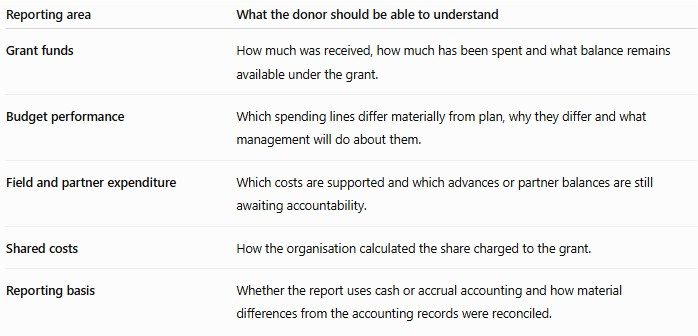
Agree the reporting basis at the start of the grant. If a donor requires a cash-based report and the organisation keeps accrual-based books, retain a reconciliation that explains the difference. This makes it easier to account for items such as unpaid supplier bills, prepayments and advances.
4. Report problems while there is time to act
A delayed activity, a missing supporting document or a likely budget overrun becomes harder to manage if it first appears in the final report. Where an issue is material or requires donor approval, communicate it in line with the grant agreement and explain the effect on spending and delivery.
A useful update gives the donor four things: what happened, what amount or activity is affected, what management is doing and when the next update or decision is due. Keep the explanation specific. If a partner has yet to substantiate an advance, show the outstanding amount and the agreed date for submitting the documents. This gives the donor a way to follow progress and gives management a clear point for escalation.
5. Give finance, programme teams and the board a shared view
Finance can explain what the organisation spent. Programme teams can explain what was delivered, why plans changed and what the next quarter will cost. Bring both teams into the review before submitting the donor report.
A monthly review can cover grant balances, spending against budget, outstanding advances, upcoming reporting deadlines and expected funding gaps. The board or finance committee can focus on the issues that need oversight, such as cash runway, funding concentration and commitments that may outlast a grant. Record who owns each action and when it is due so the next review can establish what changed.
What should a donor financial report include?
Start with the grant agreement and the donor’s reporting template. A practical report typically includes:
- The reporting period, approved budget and any agreed revisions.
- Current-period and cumulative expenditure by budget line.
- Funds received, funds spent and the remaining grant balance, with a reconciliation where needed.
- Explanations for material variances and their effect on programme delivery.
- Outstanding advances, upcoming commitments and any approvals needed from the donor.
Use the same reporting period for financial and programme information. When the narrative says six sessions took place, the donor should be able to understand which costs relate to those sessions and which amounts relate to work planned for a later period.
Build donor confidence before the next report is due
Start with one active grant. Reconcile the latest report to the ledger, check that the largest variances have a clear explanation and confirm that the remaining balance agrees with the work still to be delivered. That review will show where your organisation needs clearer grant coding, stronger supporting records or earlier conversations with programme teams.
Need support with grant accounting or donor financial reporting? Optima Accounting & Advisory helps Kenyan not-for-profits set up grant tracking, strengthen financial controls and prepare clear reports for donors and boards. Contact us to discuss your reporting needs.
Have a question about this?
Our accountants can look at your specific situation.